The Greenest Thumb
4 in. Polka Dot Plant
4 in. Polka Dot Plant
Couldn't load pickup availability
The Cheerful Splash of Color Your Shelf Has Been Missing
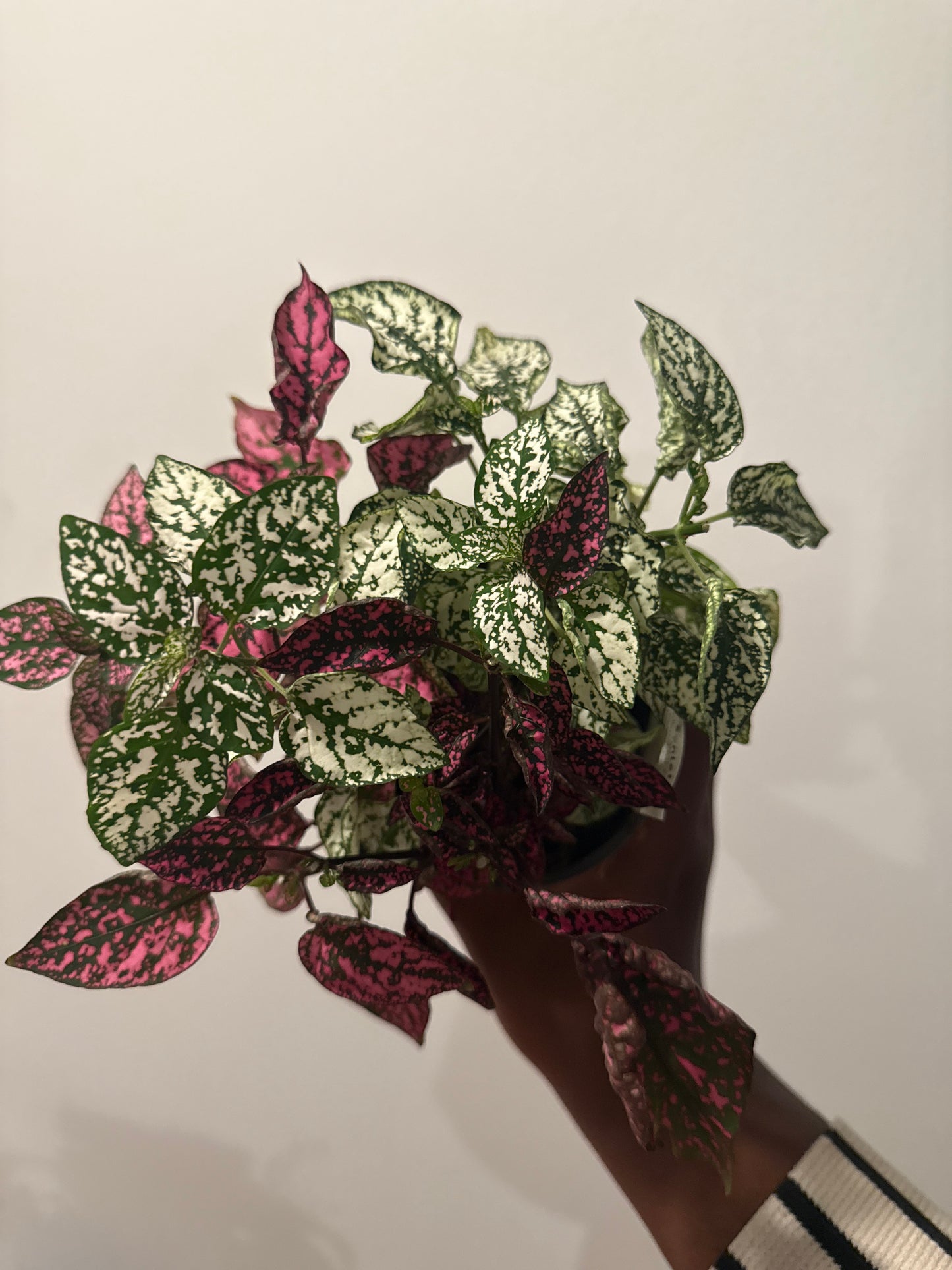
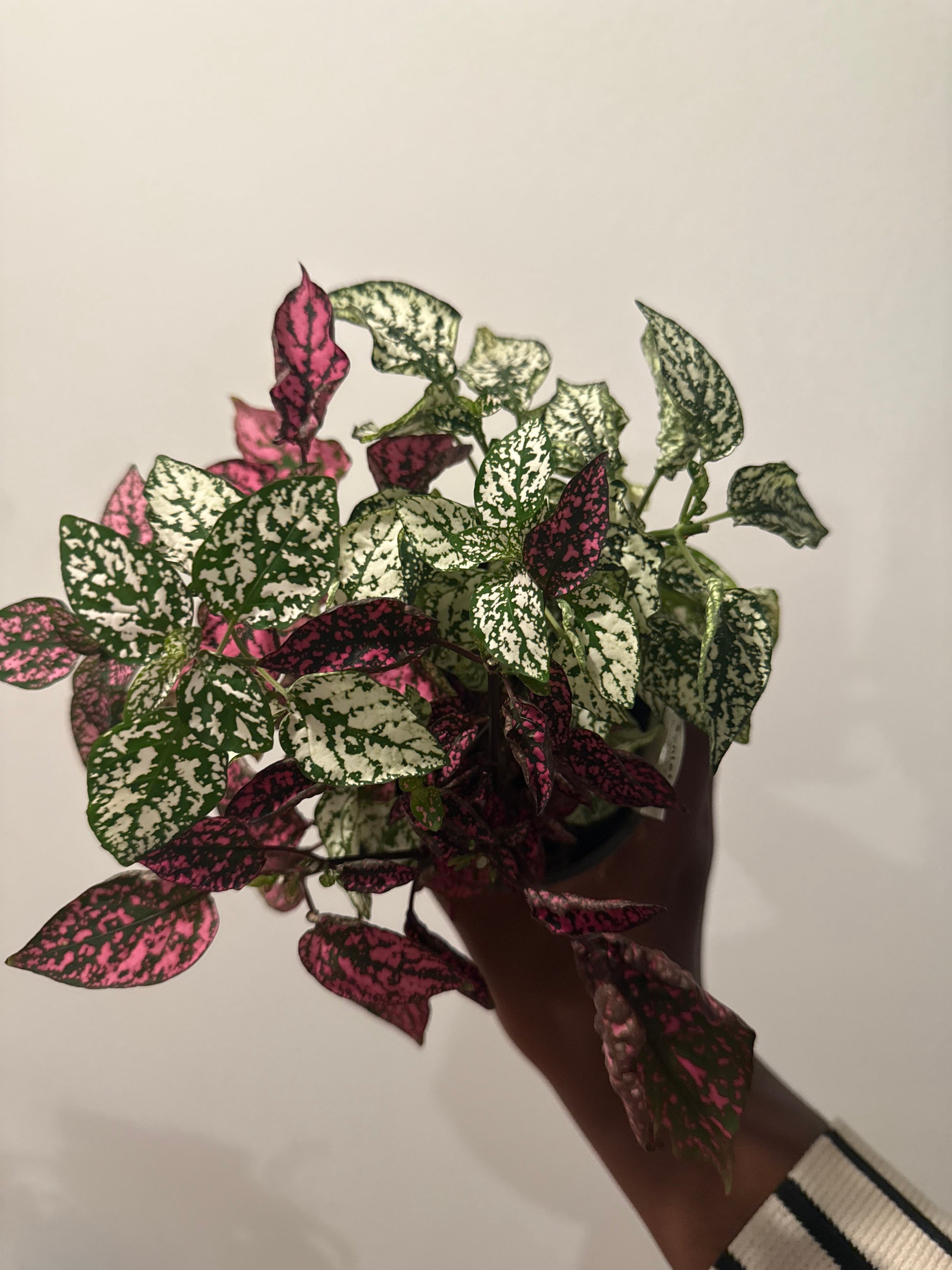
The Polka Dot Plant (Hypoestes phyllostachya) is one of the most joyful, instantly gratifying plants you can own. Vivid spots of pink, red, or white are splashed across deep green leaves in a pattern so bold and playful it looks almost hand-painted — and unlike most colorful plants, it doesn't need flowers to make a statement. The foliage is the show, and it puts it on every single day.
Native to Madagascar, the Polka Dot Plant is a compact, fast-growing beauty that brings a burst of personality to desks, shelves, terrariums, and mixed planters. It's cheerful without being loud, colorful without being demanding, and one of the most beginner-friendly plants you can add to your collection. At 4 inches, it's already full of character — and with regular pinching, it stays compact, bushy, and vibrant for months.
Why You'll Love It
- Vivid spotted foliage — bold splashes of pink, red, or white on deep green leaves; one of the most colorful foliage plants available without a single flower required
- Compact and tidy — stays small and well-proportioned with regular pinching; ideal for desks, shelves, windowsills, and small spaces
- Fast growing — fills out quickly with good light and consistent care; one of the most satisfying plants to watch develop
- Terrarium and mixed planter friendly — its compact size and love of humidity make it a natural fit for terrariums and mixed tropical displays
- Pet friendly — non-toxic to cats, dogs, and children; a safe and colorful choice for any home
- Color without flowers — delivers year-round visual impact through foliage alone; no waiting for blooms
Care Guide
- Light: Bright indirect light is essential for the most vivid, saturated spot coloration — the brighter the light (without direct sun), the more intense the pink, red, or white markings. In lower light, the spots will fade toward green. A bright east or west-facing windowsill is ideal
- Water: Keep soil consistently moist but never waterlogged — water 2–3 times per week in warm conditions, less in cooler months. The Polka Dot Plant wilts quickly when thirsty but recovers fast with a good drink; don't let it dry out completely
- Humidity: Loves humidity (50%+) for the most lush, vibrant growth; mist regularly, use a pebble tray, or place near a humidifier. In dry air, leaf edges may brown — a bathroom with good indirect light is an ideal home
- Temperature: Prefers 65–80°F (18–27°C); keep away from cold drafts and temperatures below 60°F, which cause stress and leaf drop
- Fertilizer: Feed every 2 weeks during spring and summer with a diluted balanced liquid fertilizer; the Polka Dot Plant is a hungry grower during the active season and responds visibly to regular feeding with faster growth and more vivid coloration
- Pruning — Essential: Pinch back the growing tips regularly — every 1–2 weeks during the growing season — to keep the plant compact, bushy, and full of color. Without regular pinching, the Polka Dot Plant will become leggy and sparse. This is the single most important care habit for keeping it looking its best
- Repotting: Repot when roots emerge from drainage holes; our Premium Potting Soil provides the moisture-retentive, well-draining mix it thrives in
The Pinching Habit — Your Secret to a Fuller Plant
The Polka Dot Plant's most important care secret is regular pinching. Every 1–2 weeks, simply pinch off the growing tips between your fingers — this encourages the plant to branch out rather than grow tall and leggy, resulting in a fuller, bushier, more colorful plant. It takes seconds and makes an enormous difference. Think of it as a weekly ritual that keeps your Polka Dot Plant at its most vibrant and compact.
Styling Ideas
The Polka Dot Plant's compact size and vivid coloration make it one of the most versatile accent plants in any collection. Use it as a pop of color on a desk or shelf, tuck it into a terrarium alongside ferns and mosses for a lush miniature landscape, or pair it with the deep, moody tones of the Calathea Dottie or the glossy green of the Peace Lily for a high-contrast display that lets the spots really sing.
Tip: The spot color is directly tied to light — if the markings start to fade, move the plant closer to a bright window and watch the color intensify with the next few leaves. Keep the foliage looking its most vivid with a gentle wipe or a light spritz of our Leaf Shine Spray to remove dust and let those cheerful spots shine.