The Greenest Thumb
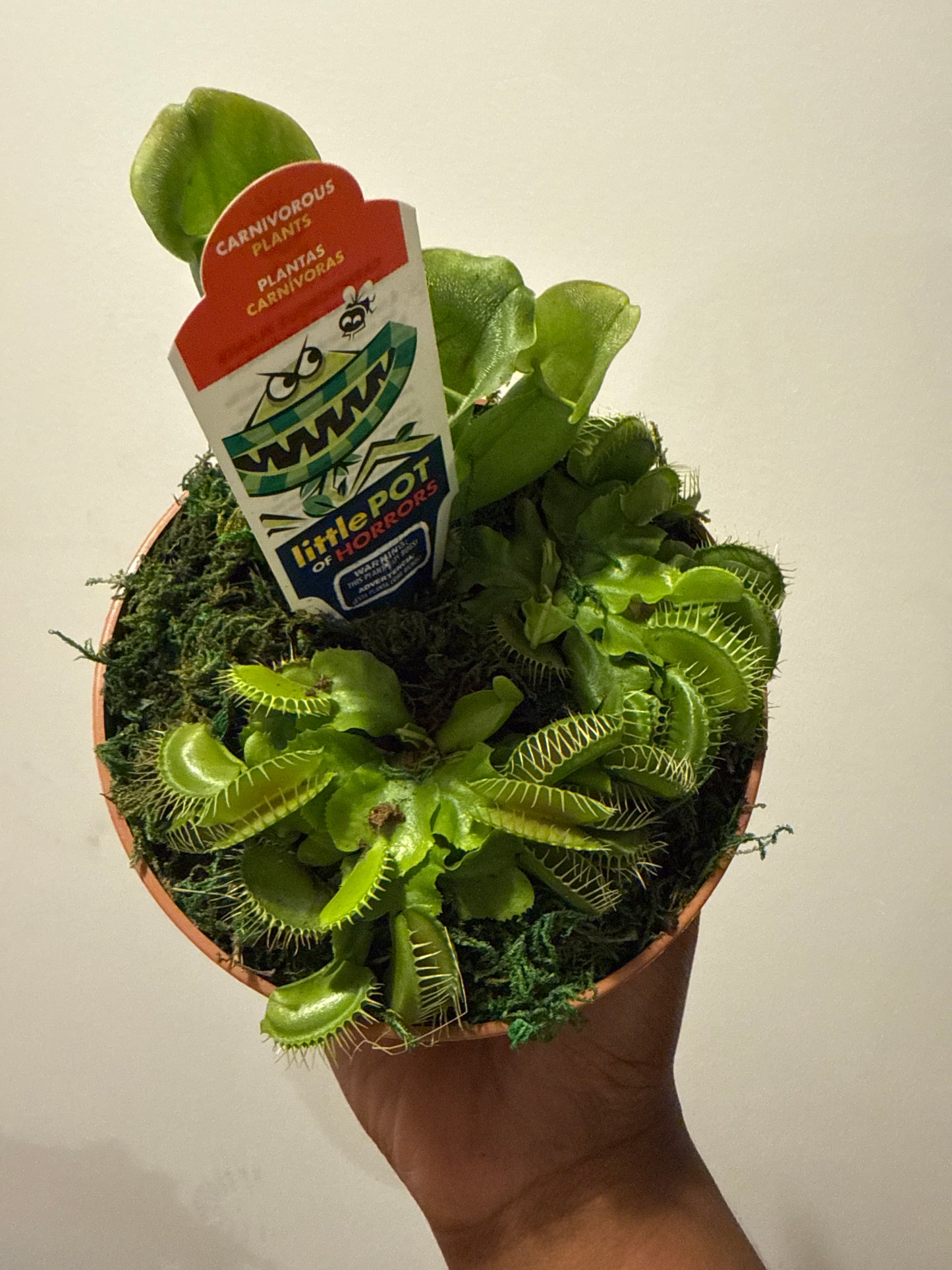
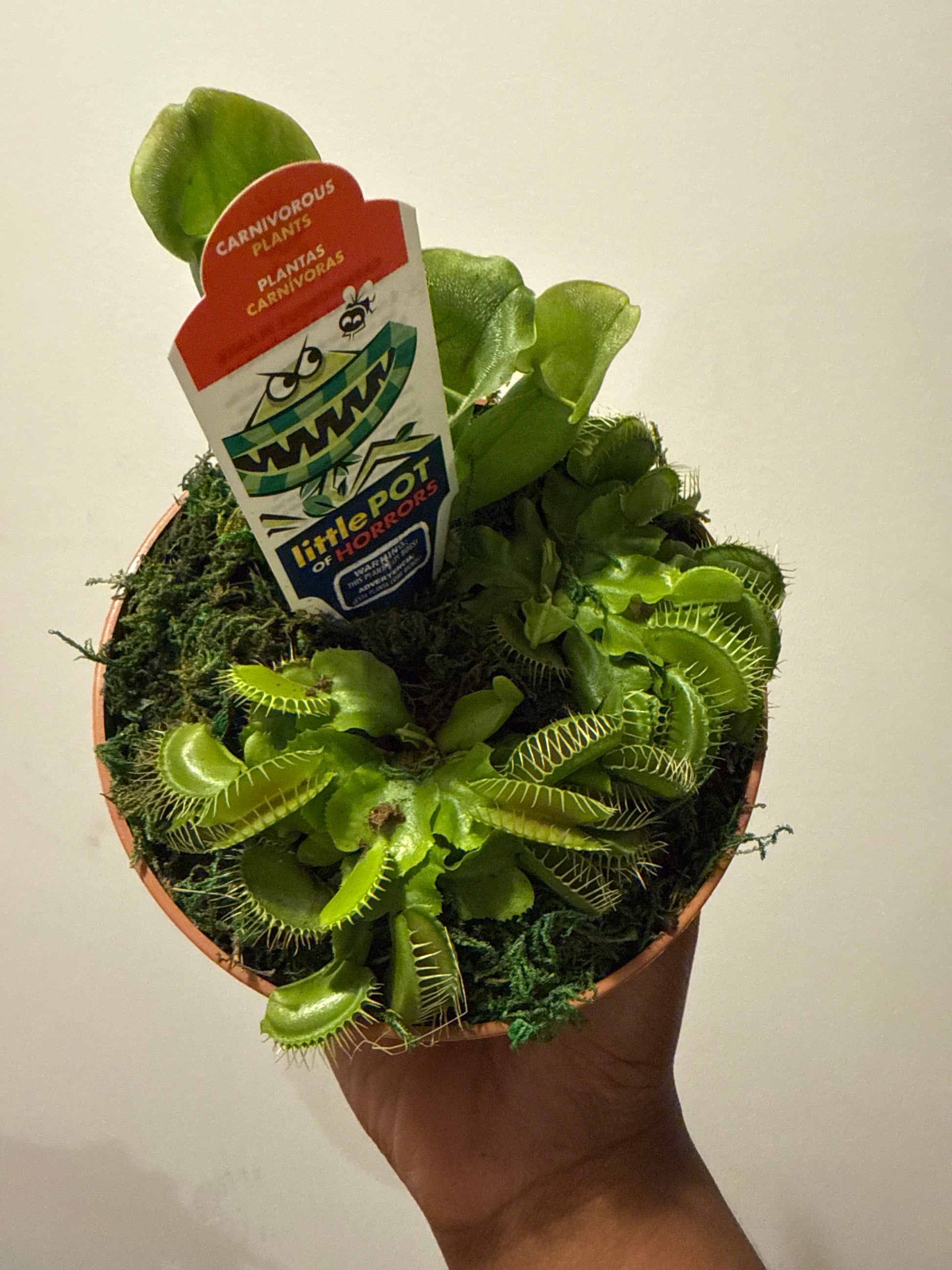
6 in. Venus Fly Trap & Pitcher Plant Bog Garden
6 in. Venus Fly Trap & Pitcher Plant Bog Garden
Couldn't load pickup availability
Nature's Most Fascinating Predators. In One Garden.
This isn't just a plant — it's a living ecosystem. The Venus Fly Trap & Pitcher Plant Bog Garden brings together two of the most extraordinary carnivorous plants on earth in a single 6-inch display: the iconic Venus Fly Trap, with its spring-loaded jaws that snap shut in a fraction of a second, and the Pitcher Plant, with its elegant, tubular traps that lure and digest insects through a combination of scent, color, and slippery walls. Together, they create a bog garden that is as scientifically fascinating as it is visually spectacular.
Carnivorous plants evolved in nutrient-poor, waterlogged environments where the soil simply couldn't provide enough nitrogen to sustain them — so they evolved to get it from insects instead. The result is a group of plants with some of the most sophisticated and dramatic survival strategies in the natural world. Owning a bog garden like this is a window into one of nature's most remarkable evolutionary stories, and it's endlessly captivating to watch.
What's Included
- Venus Fly Trap (Dionaea muscipula) — the world's most famous carnivorous plant; spring-loaded traps snap shut in as little as 1/10th of a second when trigger hairs are touched twice in succession — a remarkable adaptation that prevents the plant from wasting energy on false alarms
- Pitcher Plant (Sarracenia sp.) — elegant, tubular pitchers filled with digestive fluid that lure insects with nectar and color, then trap and digest them; one of the most architecturally beautiful carnivorous plants
- 6-inch bog garden display — both plants arranged together in a single container, creating a self-contained, display-ready carnivorous plant ecosystem
Why You'll Love It
- Endlessly fascinating — watch the Venus Fly Trap snap shut, observe the Pitcher Plant's elegant tubular traps; a living science exhibit that never gets old
- Natural pest control — carnivorous plants supplement their diet with insects; a beautiful and functional addition to any space with occasional gnats or flies
- Unique gift — unlike anything else in the plant world; a genuinely memorable gift for curious minds, nature lovers, science enthusiasts, and kids of all ages
- Display-ready — both plants arranged together in a single 6-inch container; ready to place and enjoy immediately
- A conversation starter — few plants generate as much curiosity and wonder as carnivorous plants; this bog garden will be the most talked-about thing in any room
Care Guide — Important Differences from Typical Houseplants
Carnivorous plants have very specific care requirements that are almost the opposite of most houseplants. Please read carefully — following these guidelines is essential for keeping your bog garden thriving.
- Light: Full sun to bright direct light is essential — 4–6 hours of direct sunlight per day is ideal. A south-facing windowsill is perfect. Unlike most houseplants, these plants genuinely need and love direct sun; insufficient light is the most common cause of decline
- Water — Critical: Use only distilled water, rainwater, or reverse osmosis water — never tap water, filtered water, or bottled spring water. Carnivorous plants are extremely sensitive to the minerals and salts in tap and spring water, which will kill them over time. Water by placing the pot in a shallow tray of distilled water and keeping 1–2 inches of water in the tray at all times — this mimics the waterlogged bog conditions they evolved in
- Soil: Never repot into regular potting soil or add fertilizer — both will kill carnivorous plants. They evolved in nutrient-poor conditions and require a specific mix of peat moss and perlite or pure sphagnum moss. Do not use our Premium Potting Soil for these plants
- Feeding: In a sunny outdoor or windowsill location, your plants will catch their own insects. If kept indoors away from insects, feed the Venus Fly Trap one small live or recently killed insect (a mealworm or small cricket works well) per trap every 2–4 weeks during the growing season. Never feed meat, cheese, or human food. Never trigger the traps with your fingers — each trap can only open and close a limited number of times before it dies
- Humidity: Appreciates moderate to high humidity; the tray watering method naturally helps maintain moisture around the plants
- Temperature & Dormancy: Both plants require a winter dormancy period of 3–4 months in cool conditions (35–50°F / 2–10°C) to remain healthy long-term. During dormancy, reduce watering and allow the plants to die back naturally — they will return vigorously in spring. This is normal and essential, not a sign of poor health
A Note on the Venus Fly Trap's Traps
Each trap on a Venus Fly Trap can open and close only a limited number of times before it turns black and dies — this is completely normal and part of the plant's natural cycle. New traps will grow to replace old ones. Avoid triggering the traps with your fingers or objects, as this wastes the plant's energy on non-nutritive stimulation and shortens the life of each trap.
Tip: Place your bog garden on a south-facing windowsill in a shallow tray of distilled water and let nature do the rest. The combination of direct sun, constant moisture, and the occasional insect visitor will keep your Venus Fly Trap and Pitcher Plant thriving — and endlessly entertaining.